


09.06.2025
Based on 10+ years of experience in smart home design, I can confidently say that proper switch placement critically impacts the convenience of your space.
My clients constantly ask: At what height should switches be installed? And I always answer: it’s not just a matter of aesthetics but also daily comfort.
What is the optimal switch installation height?
The optimal mounting height for switches is 80-90 cm from the floor level. This is the ideal position for most users: no need to bend down or reach up. The hand naturally finds the switch at this height.
Other standards encountered in design:
- Outdated standard: 160-180 cm from the floor (rarely used today)
- Modern European approach: 80-90 cm (most ergonomic)
- Distance from the door: no more than 1 meter from the door handle side
In our practice of turnkey smart home installations, we adhere to the 90 cm standard—it’s convenient for all family members, including children and the elderly.
Types of switches for smart homes
Touch switches
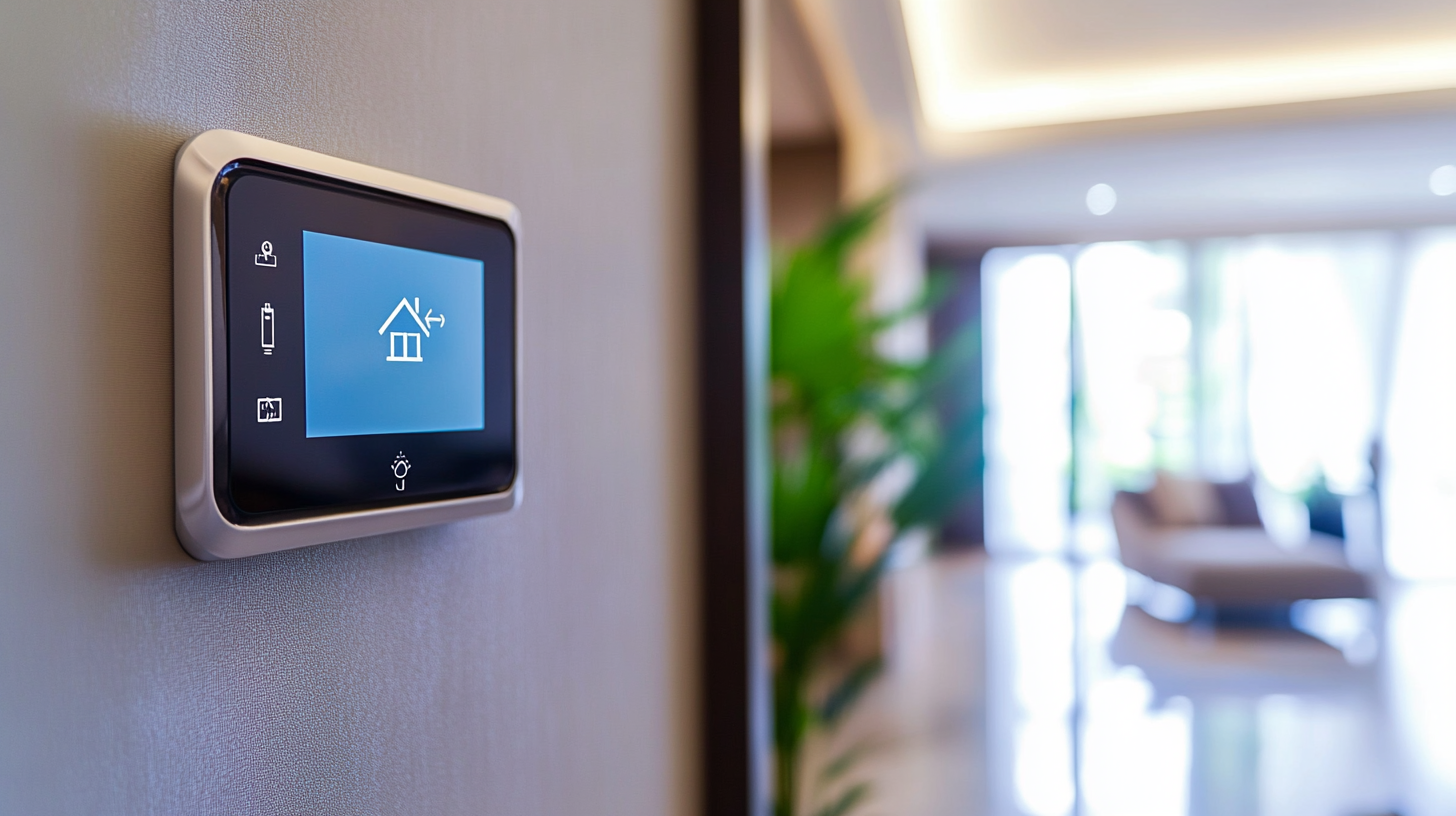
This is a premium solution from Jung, Schneider Electric, and Hager, featuring touch control. Capacitive technology makes usage intuitive and elegant.
Advantages of touch switches:
- Sleek design for modern interiors
- High durability with no mechanical wear
- Protection against accidental activation
- Full integration with KNX and Zigbee protocols
In our projects, touch switches are particularly in demand for premium apartments and villas, where both functionality and aesthetics matter.
Button (toggle) switches
A classic from Jung and Schneider Electric that remains popular due to reliability and an intuitive interface. Modern models support KNX and Zigbee protocols, allowing seamless integration into a unified smart home system.
We frequently use button switches in projects where a balance between price and quality is essential. The cost per control point starts from €50.
Touch control panels
Multifunctional devices from Zennio, HDL, and Interra enable control not only of lighting but also climate, blinds, multimedia, and other smart home systems. The price for such panels starts from €300.
In our standard electrical panels, we typically allocate capacity for 5-7 touch panels in an average-sized home, ensuring flexibility in managing all systems.
How to properly place switches in different rooms?
Living room and bedroom:
- Main switches at 90 cm height near the room entrance
- Touch panels for scene control at 150 cm height
- Additional bedside switches for controlling all lighting without getting up
When creating project documentation for bedrooms, we always plan redundant switches and include Night and Morning scenes.
Kitchen and bathroom:
- Switches are installed at a safe distance from water sources (minimum 60 cm)
- Models with moisture protection (IP44 or higher) are used
- Touch panels are placed for convenient control of ventilation and lighting scenes
In our bathroom projects, we always integrate Aqara water leak sensors for added safety.
Hallway and corridor:
- Main switches are installed no more than 1 meter from the entrance door
- In long corridors, two-way switches are used at both ends
- Touch panels are placed for managing I’m Home and I’m Leaving scenes
Standard hallway solutions in our practice usually include automated lighting with motion sensors and integration with the security system.
Multi-level lighting control system
For maximum convenience, we recommend a multi-tiered approach:
- Base level (90 cm from the floor)
Standard switches for primary lighting in each room. Integrated into KNX or Zigbee systems for remote control.
- Mid level (150 cm from the floor)
Touch panels for managing scenes, climate, and other systems. Placed in key home areas—living room, kitchen, master bedroom.
- Remote level
Control via smartphone, tablet, or voice assistants like Yandex Alice. Provides access to all smart home functions from anywhere in the world.
Our project documentation always includes detailed layouts of all control levels, specifying exact installation heights and device types.
Integration into the smart home ecosystem
When choosing switches, it’s important to consider compatibility with the overall ecosystem:
- KNX—a professional wired protocol with high reliability and extensive integration capabilities, ideal for new constructions
- Zigbee—a wireless protocol, convenient for renovations without wall chiseling
- Matter—a new standard ensuring cross-manufacturer compatibility
In our standard electrical panels, we usually include support for multiple protocols simultaneously, enhancing system flexibility.
Cost of smart home solutions
- Basic smart home-compatible switches—from €50 per point
- Multifunctional touch panels—€300-600 depending on features
- Standard smart control panel for an apartment—from €2000
- Standard smart control panel for a private home—from €4000
- Turnkey smart home projects—from €10 per square meter (design documentation only)
A real-life example: For a 250 m² home, proper switch planning and placement saved the client about 40% of the procurement and installation budget while integrating previously purchased equipment into a unified system.
Why trust professionals with installation
Professional smart home design and turnkey installation ensure:
- Harmonized system operation
- Scalability for future expansions
- Reliable performance guarantees
- Up to 40% budget savings through precise planning
Our team of KNX, DALI, Zigbee, and Z-Wave certified specialists has completed over 150 private homes and executes 50+ projects annually. We guarantee quality at every stage—from design documentation to final system configuration.
Proper switch placement and selecting the right types isn’t just about convenience—it’s the foundation of a comfortable and functional smart home you’ll enjoy every day.